
How to Get High-Quality Prints of Your Art
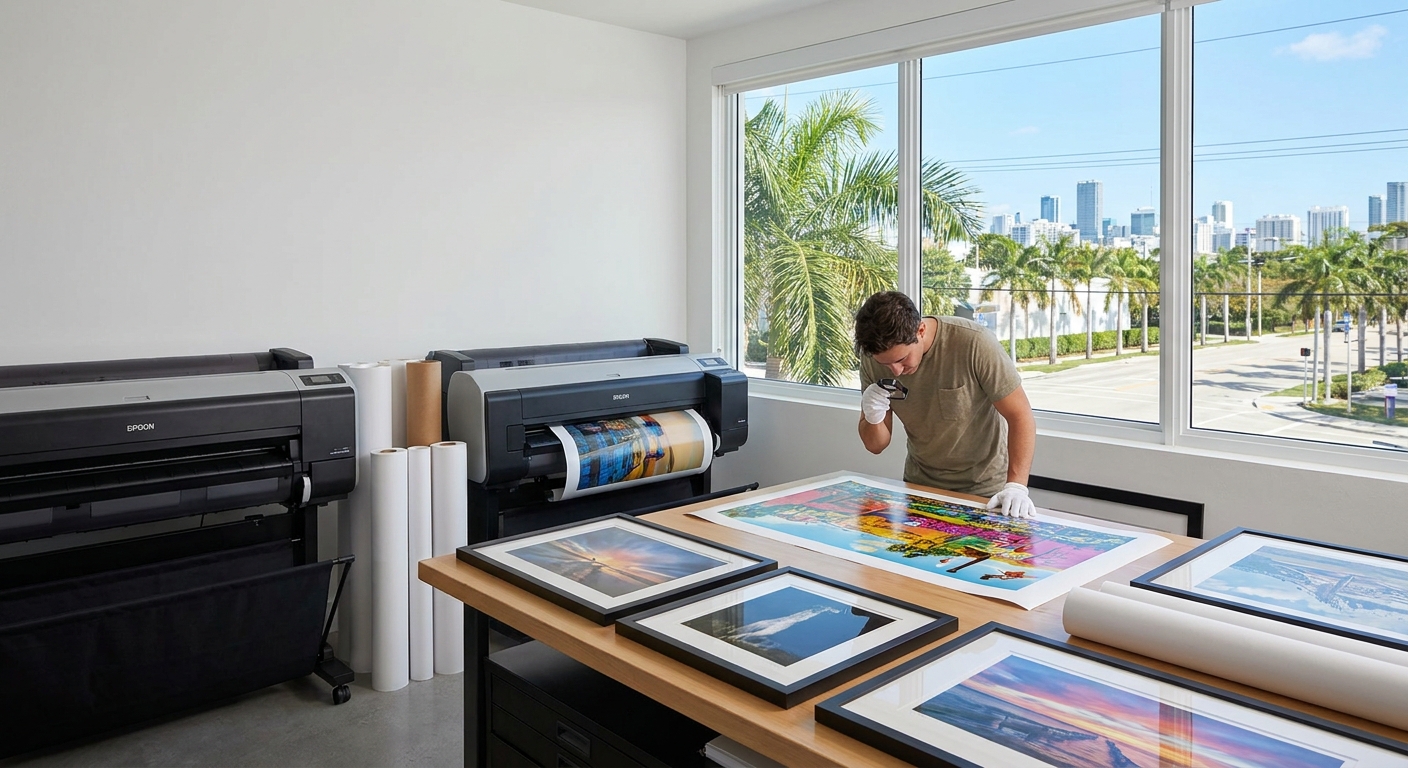
Most artists assume printing is just about hitting "send" and waiting for boxes to arrive. But the gap between your original work and what comes back from the printer? That's where things fall apart if you're not paying attention. A great print doesn't happen by accident. It's the result of sharp preparation, informed choices, and knowing which corners you can't afford to cut.
Your art deserves better than muddy colors and pixelated edges. Whether you're building inventory for a show or fulfilling orders from your studio, we're walking through what actually matters when it comes to turning your work into prints worth framing.
Resolution Decides Everything Before You Even Print
Print quality lives or dies by the file you submit. If your digital capture isn't clean and detailed, no printer on earth can save it. We're talking 300 DPI minimum at the final print dimensions — anything less and you're gambling with sharpness. Scan your traditional pieces with precision or shoot them with gear that won't flatten your colors into mush.
Lighting matters more than most artists realize. Uneven shadows or harsh glare during capture will haunt every print. Use diffused natural light or balanced studio lighting, keep your camera steady, and shoot straight-on to avoid distortion. If you're stitching scans together for oversized work, make sure your seams are invisible and your tones consistent across the entire image.
Your Monitor Lies Unless You Calibrate It
What you see on screen and what rolls off the press are two different animals — unless you force them into alignment. Monitor calibration isn't optional if you care about color fidelity. A calibration tool costs less than one botched print run, and it ensures the blues you edited stay blue when they hit paper.
Color profiles matter just as much. Working in sRGB might look fine on your laptop, but printers need CMYK or Adobe RGB to translate your hues accurately. Ask your print shop which profile they prefer and build your files accordingly. Skipping this step is how you end up with washed-out prints that don't match your originals.
Printing Methods Aren't Interchangeable
Different jobs call for different processes, and knowing which one fits your work saves you money and headaches. Giclée printing delivers museum-grade results with archival inks and fine detail — perfect for limited editions or gallery pieces. Offset works when you're printing in bulk and need consistency across hundreds of copies. Digital printing gives you speed and flexibility for smaller batches without the setup costs.
Talk to your printer about what makes sense for your volume, timeline, and budget. Each method has trade-offs, and the right one depends on whether you're making five prints or five hundred.
Paper and Canvas Quality Shows Up Immediately
Cheap substrates cheapen your work, no matter how strong the original is. Fine art papers — cotton rag, textured watercolor stock — give your prints weight and presence. Glossy finishes punch up vibrancy, while matte surfaces offer subtlety and elegance. Canvas printing brings that gallery aesthetic, but only if the canvas itself is archival and properly stretched.
Request samples before committing to a full order. Feel the texture, check the color absorption, and see how the material interacts with your artwork. What works for one piece might not suit another, and there's no substitute for holding the options in your hands.
- Cotton rag papers deliver richness and durability for fine art reproductions
- Glossy finishes amplify color intensity and contrast
- Matte surfaces reduce glare and provide a softer presentation
- Archival canvas resists yellowing and degradation over time
- Textured papers add dimension and tactile interest to prints
Find a Printer Who Knows Fine Art
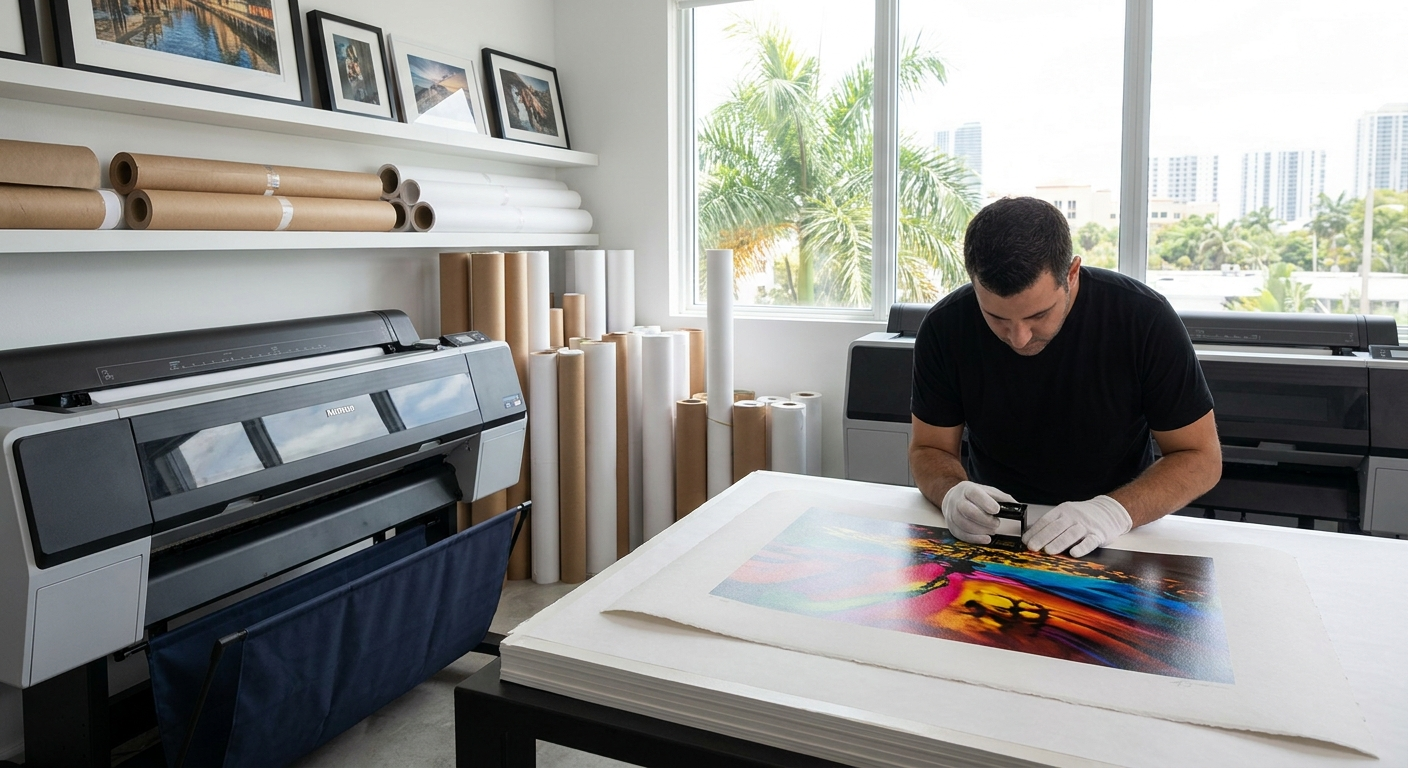
Not every print shop understands what artists need. Look for providers with portfolios full of work like yours — people who talk about color matching and substrate options without making you feel lost. Reviews from other artists matter more than slick marketing copy.
Proofing services separate serious printers from corner-cutters. A proof lets you approve color accuracy and quality before the full run begins. Use it. One sample print now prevents a hundred unusable prints later.
- Check portfolios for work similar in style and medium to yours
- Read artist reviews, not just generic customer testimonials
- Ask about equipment specifics and ink quality
- Confirm turnaround times and minimum order quantities
- Request a proof before authorizing the full production run
File Prep Is Where Mistakes Hide
Submitting a file without triple-checking the specs is asking for trouble. Confirm resolution, color profile, and format match the printer's requirements. Include bleed and crop marks if your design runs to the edge. Export at the highest quality setting your format format allows — compression artifacts ruin detail faster than you'd think.
Keep a master file separate from what you send to print. That way, if you need to make adjustments or reorder later, you're not starting from scratch or digging through old exports trying to remember which version was final.
- Verify 300 DPI resolution at actual print dimensions
- Match color profile to printer specifications
- Use TIFF or PSD for maximum quality retention
- Add bleed margins for edge-to-edge designs
- Archive master files separately from print-ready exports
Handle and Store Prints Like They're Worth Something
Once prints arrive, treat them with care. Fingerprints and smudges don't buff out. Use gloves or handle prints by the edges. Store them flat in acid-free sleeves, away from sunlight and humidity. If you're framing, use archival mats and UV-protective glazing to prevent fading.
Rushed handling or sloppy storage ruins prints just as effectively as bad printing. You put in the work to get quality reproductions — don't undo it by leaving them stacked in a damp corner or tossing them in cardboard without protection.
- Handle prints with clean hands or cotton gloves
- Store flat in acid-free portfolios or sleeves
- Keep prints away from direct sunlight and moisture
- Use archival mats when framing to prevent acid transfer
- Choose UV-protective glass or acrylic for long-term display
Quality Prints Reflect How Much You Care
Getting prints that do justice to your work isn't complicated, but it does require intentionality at every step. From file capture to paper selection to how you store the finished product, each decision either protects your vision or dilutes it. There's no magic shortcut, just solid preparation and a refusal to settle for mediocre output when your art deserves better.
Let's Bring Your Art to Life
We know how much your art means to you, and we're here to make sure every print captures that same passion and detail. If you're ready to see your work reproduced with the care it deserves, let's talk about your next project. Call us at 305-754-3888 or request a quote and let’s create prints you’ll be proud to share.