.png)
Should Miami Artists Print on Canvas or Fine Art Paper?
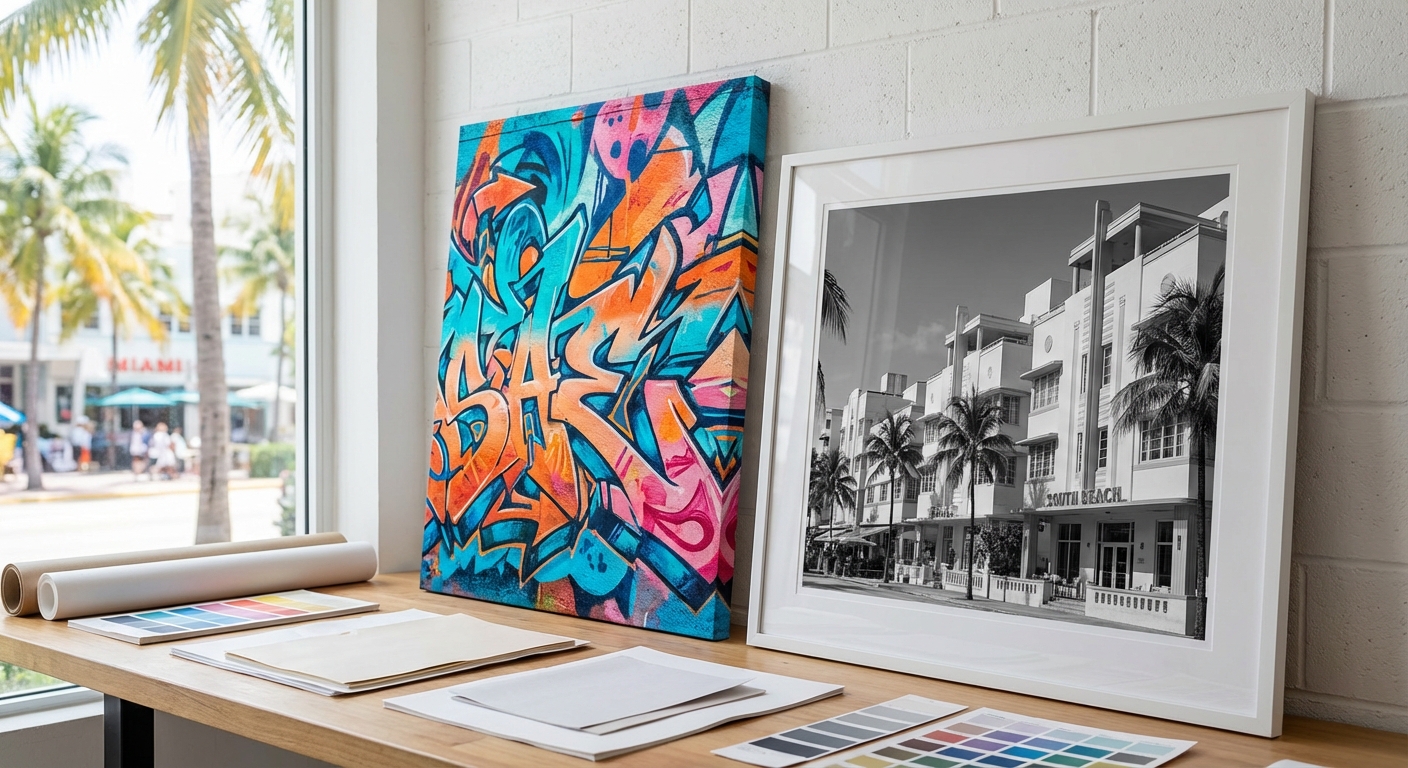
Most Miami artists think printing is just about getting the image off the screen. Pick a surface, send the file, hang it up. But collectors see more than that — and if you don't, we're leaving money on the table. The medium isn't just a backdrop. It shapes how light hits the piece, how texture reads across a room, and whether someone walks past or stops cold.
So here's what matters. If we're creating work that deserves to last, the substrate isn't an afterthought. Canvas and fine art paper each carry weight — literally and visually. Every choice should be grounded in what the work demands, not just what's easier to ship or cheaper to frame.
Canvas Brings the Punch
Canvas doesn't whisper. It announces. The weave adds dimension that flat paper can't touch, and in a city where color screams from every corner — Wynwood walls, Little Havana murals, Brickell sunsets — that texture amplifies what's already bold. We've seen pieces that looked decent on a monitor come alive once stretched over bars, the grain catching light in ways that make pigment pop.
Durability plays a role too, especially down here. Miami's humidity doesn't care about your creative process. Canvas printing handles moisture better than paper, resists fingerprints when clients get handsy at openings, and doesn't need glass to survive. Stretch it, hang it, done. No heavy frames. No glare bouncing off protective glazing. Just the work, wrapped around the edges if we want that gallery look, or framed traditionally if the client prefers structure.
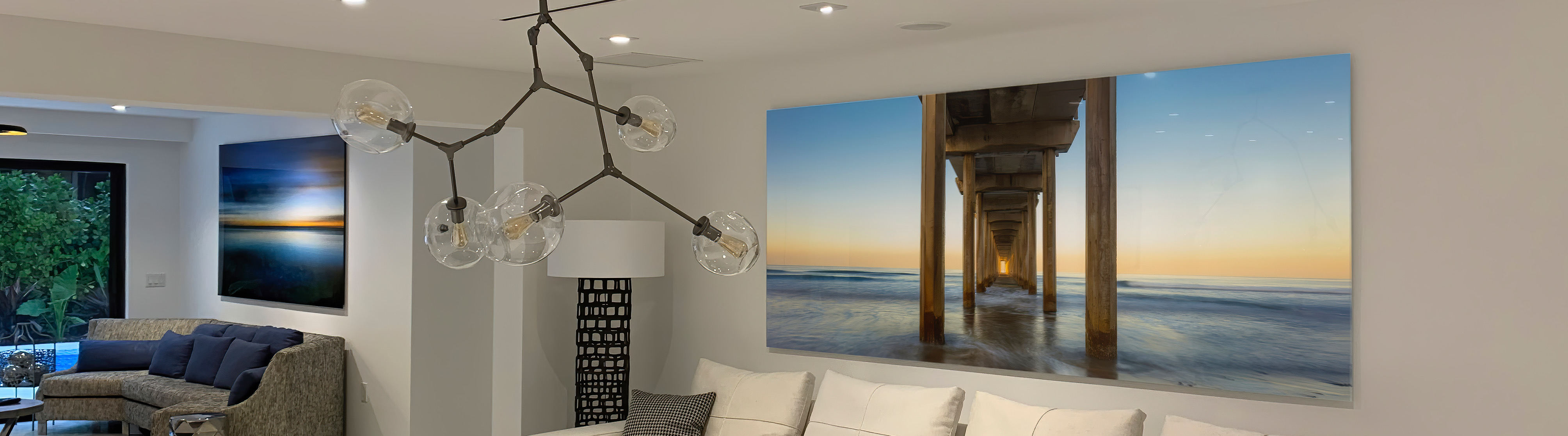
Large-scale installations favor canvas for a reason. When we're filling a wall in a Brickell condo or a Coconut Grove courtyard, canvas scales without buckling. The frameless wrap keeps it modern, clean, ready for spaces that don't mess around with fussy presentation.
Fine Art Paper Holds the Detail
Paper doesn't shout, but it doesn't need to. High-grade cotton rag or archival watercolor stock captures what canvas can't — the whisper-thin gradients, the razor-sharp linework, the tonal shifts that separate good from exceptional. If the work leans photographic or relies on subtlety, paper delivers fidelity that canvas blurs.
There's a formality to paper prints that collectors recognize. Matted, framed under museum glass, they carry a gallery pedigree that canvas sometimes lacks. For artists chasing representation in Coral Gables or Design District spaces, that traditional presentation signals seriousness. It says the work isn't just decoration — it's an investment.
Archival quality matters more than most artists admit. Acid-free, lignin-free papers resist the yellowing and brittleness that cheaper stocks suffer. In a city where UV rays hammer through floor-to-ceiling windows, longevity isn't optional. We need prints that survive decades, not seasons. Paper engineered for permanence gives collectors confidence that what they buy today won't fade by next summer.
What Miami's Climate Demands
Humidity isn't just uncomfortable — it's destructive. Paper warps, adhesives fail, and mold creeps in when moisture sits too long. Canvas tolerates the swamp air better, but neither medium is bulletproof without proper care.
- Ventilation: Prints stored or displayed in poorly ventilated spaces risk moisture damage regardless of substrate
- UV Protection: Both canvas and paper fade under direct sunlight; UV-filtering glass or coatings extend lifespan
- Framing Choices: Paper demands acid-free mats and sealed backing; canvas benefits from protective varnish or spray
- Storage Conditions: Climate-controlled environments prevent warping, mildew, and adhesive breakdown
- Handling Protocols: Canvas withstands casual contact; paper requires gloves and rigid support during transport
Matching Medium to Market
Not every collector wants the same thing. Some chase the tactile, gallery-wrapped vibe that canvas delivers. Others want the refined, museum-quality presentation that only giclée prints achieve. We've watched artists lose sales by offering only one format when the buyer's taste ran the other direction.
Offering both isn't indecisive — it's strategic. Different works call for different treatments, and different buyers respond to different cues. A vibrant abstract might sing on canvas while a moody black-and-white portrait demands paper's tonal range. Knowing which piece gets which treatment separates amateurs from professionals.
- Bold, Saturated Work: Canvas enhances vibrancy and adds physical presence
- Detailed, Subtle Imagery: Paper preserves fine lines and smooth transitions
- Modern Interiors: Frameless canvas fits minimalist, contemporary spaces
- Traditional Settings: Matted paper suits classic, formal environments
- Budget-Conscious Buyers: Paper prints often cost less upfront, though framing adds expense
Where Artists Stumble
Picking a medium based on what's trendy or what another artist uses is lazy. The work should dictate the substrate, not Instagram aesthetics or what sold last month. We've seen gorgeous pieces printed on the wrong surface because the artist didn't think it through — canvas that flattened delicate detail, paper that couldn't handle saturated color.
Skipping archival standards is another trap. Cheap canvas or bargain paper might look fine at first, but degradation shows up fast in Miami's environment. Collectors notice when prints yellow or crack within a year. That's not just a lost sale — it's a damaged reputation.
- Ignoring Substrate Weight: Thin canvas sags; flimsy paper buckles
- Overlooking Coating Options: Unprotected prints fade faster under UV exposure
- Mixing Personal Preference with Client Needs: What we like doesn't always match what sells
- Rushing Print Decisions: Test prints reveal issues that digital previews miss
- Neglecting Proper Documentation: Collectors want to know materials, edition size, and care instructions
Testing Before Committing
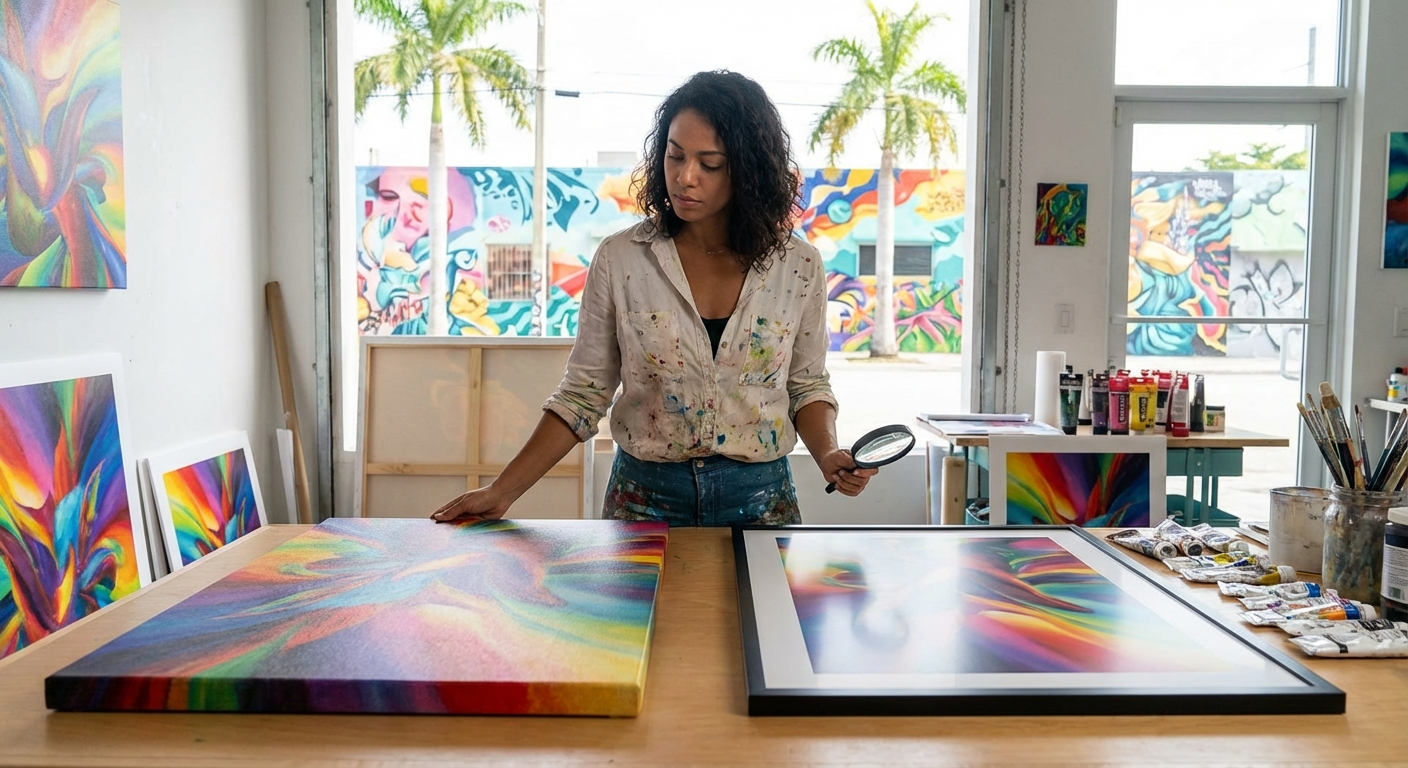
We don't guess. We print samples. A piece that looks killer on screen might fall flat on canvas or lose punch on paper. Running test prints on both substrates shows exactly how color shifts, how texture interacts, and whether the medium supports the vision.
Reputable print shops offer proofing services, and skipping that step is asking for disappointment. We've learned the hard way that what works for one piece doesn't automatically translate to another. Testing isn't extra — it's essential.
- Color Accuracy: Different substrates absorb ink differently, shifting hues
- Texture Interaction: Canvas weave can obscure fine detail or enhance bold strokes
- Finish Comparison: Matte, satin, and gloss surfaces each affect visual impact
- Scale Considerations: Small prints behave differently than large-format pieces
- Lighting Response: How the print looks under gallery lights versus natural daylight matters
When to Bring in Expertise
If the work is headed to a serious gallery, a high-end collector, or a public installation, guessing isn't an option. Print consultants and archival specialists know what holds up, what fades, and what collectors expect. They've seen enough failures to steer us away from mistakes before they happen.
Professional framers also matter more than most artists realize. A cheap frame job undermines even the best print. Acid-free mats, UV-protective glass, and proper mounting techniques aren't luxuries — they're baseline standards for work that's meant to last.
- Archival Consultation: Specialists identify materials that meet museum standards
- Color Management: Calibrated workflows ensure prints match original files
- Edition Planning: Professionals help structure limited runs and certificates of authenticity
- Framing Guidance: Experts match presentation style to work and client expectations
- Longevity Testing: Some labs offer accelerated aging tests to predict durability
Printing Smart, Not Just Fast
Choosing between canvas and fine art paper isn't about picking a winner. It's about understanding what each medium does best and matching that to the work in front of us. Miami's art scene rewards artists who think beyond the image itself — who consider how light, texture, and presentation shape the viewer's experience.
We're not just making prints. We're building a body of work that stands up to scrutiny, survives the climate, and meets the expectations of collectors who know the difference. Choosing the right paper and canvas both have a place in that process. The trick is knowing when to use which — and having the discipline to test, refine, and commit to quality every single time. For artists seeking digital art reproduction services, understanding these substrate differences becomes even more critical. Working with art printing services that offer both options ensures your work gets the treatment it deserves.
Let’s Elevate Your Next Print
We know how much your art means to you, and choosing the right medium is a decision that can make all the difference. If you’re ready to see your work shine—whether on canvas or fine art paper—let’s talk about the best approach for your next project. Give us a call at 305-754-3888 or request a quote and let’s create something that truly stands out in Miami’s vibrant art scene.